
Who the Economy Is Designed to Protect (Hint: it Ain’t the Worker)
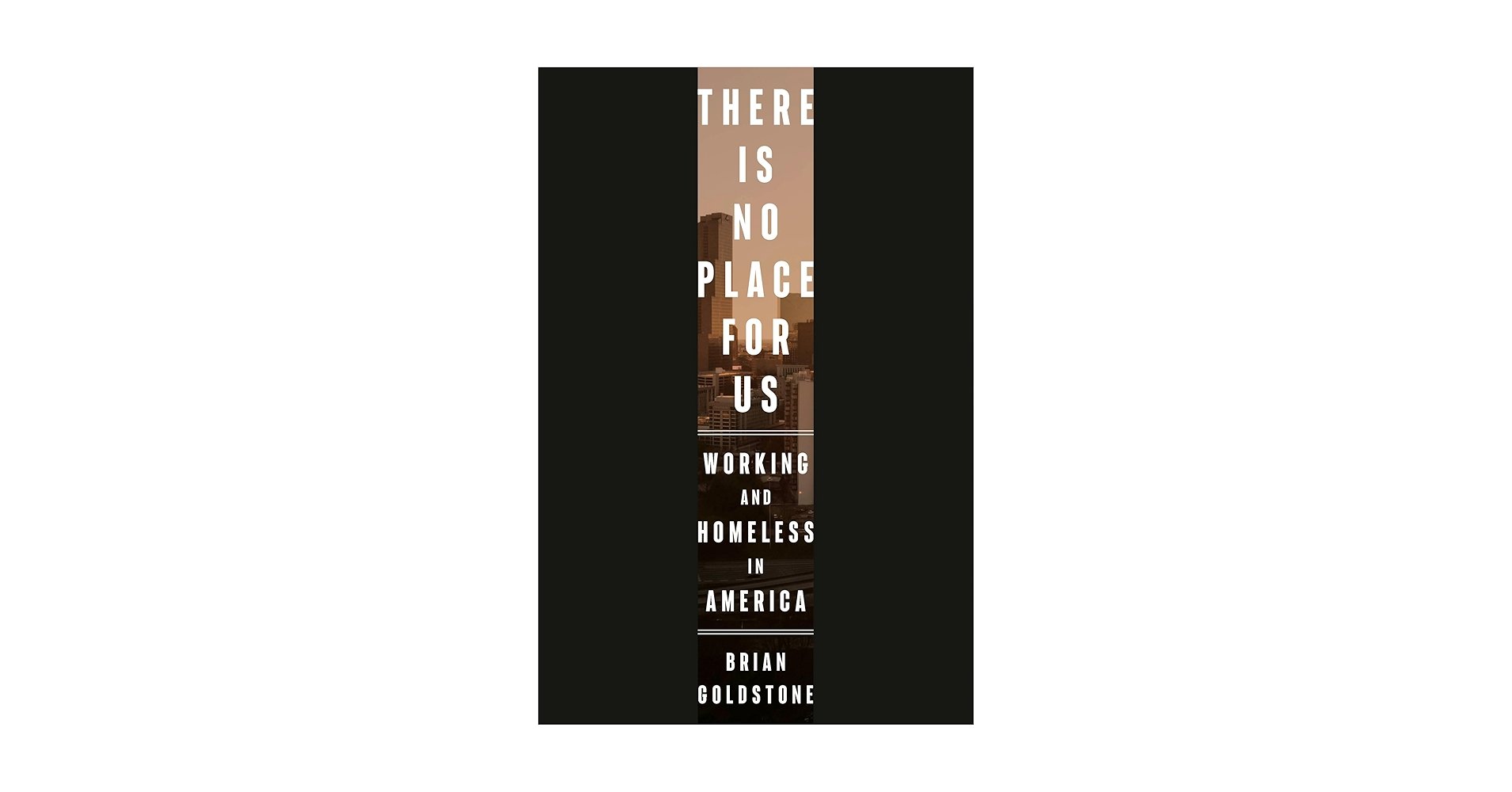
Over the holidays I read the books Enshitification by Cory Doctorow and There Is No Place for Us by Brian Goldstone. Reading them one after the other makes something starkly visible. These are not separate stories about technology and housing. They are accounts of the same economic logic, operating in different domains.
Doctorow describes how platforms including Facebook, Google, Amazon, and Uber began with an orientation toward serving users. Over time, as those users became locked in and the cost of leaving grew too high, the platforms shifted their attention to business customers. Ill-gotten user data, harvested under the guise of convenience or personalization, became the product, allowing a range of businesses to hyper-target us. But the story doesn’t stop there. Once advertisers, sellers, and developers became equally dependent, the platforms began extracting from them as well. Today, Amazon takes 51% of many third-party sales. Apple claims 30%of revenue generated inside apps it does not build. Uber drivers often discover they lose money on individual fares. What began as services acting as intermediaries between buyers and sellers ends with “rent-seeking” by the platforms.
Goldstone shows what happens when that same extraction logic is applied to labor and shelter. Read together, the books reveal an economy that has decided people are the flexible part of the system, meaning they’re the part that can absorb the most damage without damaging profits. In both accounts, labor is systematically devalued.
Tech platforms tout flexibility (“Be your own boss!”)” while stripping workers of stability, benefits, and bargaining power. Housing markets frame unaffordability as a neutral outcome of supply and demand rather than the result of policy choices. The result is the same. Full-time work no longer guarantees security, and employment no longer guarantees housing. When people fall through, the system doesn’t treat it as failure, but as confirmation that the sorting mechanism is doing its job.
Goldstone’s reporting makes clear that working homelessness is not an edge case or a moral failing. It’s the predictable outcome of treating housing as an investment vehicle rather than a basic need. Throughout the book, he shows how families are pushed into precarity by a housing system organized around profit, not stability, and how corporate and Wall Street landlords have come to play an outsized role in shaping who gets to stay housed and who does not.
“Goldstone’s reporting makes clear that working homelessness is not an edge case or a moral failing. It’s the predictable outcome of treating housing as an investment vehicle rather than a basic need.”
That story unfolds in a housing market already transformed by the aftermath of the 2008 financial crisis. Millions of homes entered foreclosure, reshaping neighborhoods and rental markets across the country. Housing scholars and economists have documented how, in the years that followed, particularly in the early 2010s, institutional investors and private equity firms moved aggressively into distressed housing, buying homes in bulk and converting them into large-scale rental portfolios. The result was a market increasingly defined by financialized ownership, where housing functioned less as shelter and more as a yield-generating asset.
When the pandemic hit in 2020, the same logic reappeared. Markets cratered briefly, then rebounded as extraordinary federal interventions stabilized asset values across the economy. The Big Fail, by Joe Nocera and Bethany McLean, examines this moment in detail. The book shows how the Trump administration, led by Stephen Mnunchin, responded to COVID by protecting financial markets and asset holders first, even as workers, tenants, and patients were left exposed.
Nocera and McLean show how the financial shock was contained quickly, while the human costs were not. Private-equity-owned hospitals and nursing homes, stripped down to maximize returns, were especially vulnerable. Pandemic interventions blurred the line between regulated and unregulated capital. While banks are required by law to hold reserves and face stress tests, private equity firms do not. Yet private equity portfolios still benefited from the market stabilization that kept asset prices afloat.
Put another way, when a crisis hits, capital is generally protected and risk flows downward. Those positioned to extract value are insulated, everyone else absorbs the damage.
Doctorow’s concept of enshitification helps explain why this pattern feels so familiar. Once an intermediary controls access to information, work, or housing, extraction replaces service. Choice narrows and risk is pushed downward. The platform remains profitable even as the human experience degrades. Homelessness among people who work full time is not a glitch in this system. It’s evidence that a system designed to reward the few is functioning as intended.

“When a crisis hits, capital is generally protected and risk flows downward. Those positioned to extract value are insulated, everyone else absorbs the damage. Doctorow’s concept of enshitification helps explain why this pattern feels so familiar.”
We can see both sides of this dynamic here in Woodstock. There are people doing serious, often unheralded work to build truly affordable housing, with support from the town and the state. Local merchants pay they their employees well above the minimum wage because they understand their businesses depend on the people who keep this place running. These efforts are real, and they matter.
But they’re also constrained by forces far beyond any one town’s control. Across the country, wages can’t keep pace with housing when it’s treated as a speculative asset. A nonprofit building a limited number of units can’t offset national capital flows that reward extraction at scale. This is not a failure of local will, it’s the collision between community effort and an economy designed elsewhere.
That’s why none of this should be understood as accidental. The causes of our inequality are known. They’ve been studied, debated, and, in many cases, deliberately reinforced. As we look toward the 2026 midterm elections, the question isn’t whether these systems can be tweaked at the margins, but whether we’re willing to confront them directly. An economy designed to protect asset holders over workers will keep producing the same results. Changing those results requires changing the design.