
Memories of Village Pantomime in North Norfolk
My NSOTA project was to research remnants of the Carnivalesque within living traditions of village pantomime in North Norfolk. This was done in the context of a historical survey of both carnival and pantomime reaching back to medieval fairs. The origins of pantomime were traced from the travelling bands of Comedia dell’ Arte players, through Grimaldi’s performances as a clown in London theatres, to the emergence of the dame as the central pantomime character in Victorian England. It then looks at the development of village (non-professional) pantomime and how its origins differ from those of the professional stage. I also looked at the spread of the aesthetic of the music halls into the countryside, partly through highly decorated gypsy caravans in the late 19th century and partly through fairground sculpture and scenery painting. The second part of the project was an oral history section recording memories of people involved in pantomime during the 1980s.
The final conclusion was that in the constant revitalisation of this village tradition, communities retain and strengthen their ability to co-operate and work together for a common goal, and through humour, retain the ability to attack the status quo, thus preserving an authentic voice free from marketing, consumerism, business or politics. Building this ability to work communally is vital in fighting the forces making our climate-changing world increasingly volatile, divided and unequal.
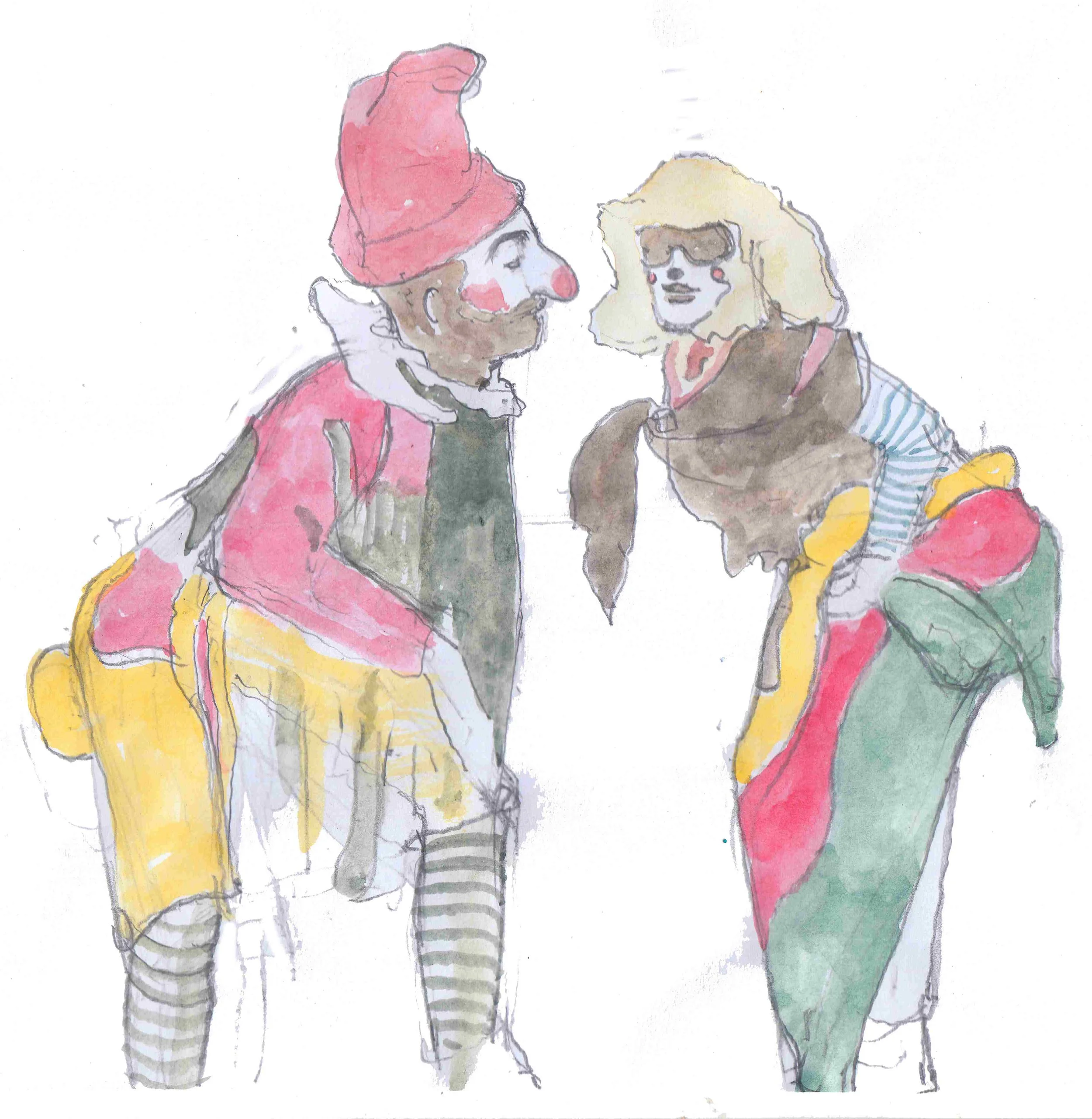
The finished project piece was a small book I designed from the writing illustrated in watercolour on every page.