Forgotten Congolese: Banyamulenge Ethnicity in the Democratic Republic of Congo South Kivu region from 2017-2021
Abstract of Paul Habineza’s Research Project, New School of Anthropocene, July 2025.
The Democratic Republic of the Congo (DRC) is a vast country located in Central Africa with a population of over 90 million people, making it the fourth most populous country in Africa. The DRC is rich in natural resources, including minerals like cobalt, copper and diamonds, but despite this wealth it remains one of the poorest countries in the world owing to decades of conflict, corruption and political instability. The DRC borders several countries in the region; the Banyamulenge ethnicity is located in South Kivu adjacent to Rwanda and Burundi.
The problem at hand is the ongoing violence and systematic ethnic-cleansing that targets the Congolese Banyamulenge community in the South Kivu region of the DRC. The Banyamulenge, a minority ethnic group with Tutsi origins, has faced relentless persecution, driven by deep-seated ethnic tensions and the complex dynamics of regional conflict.
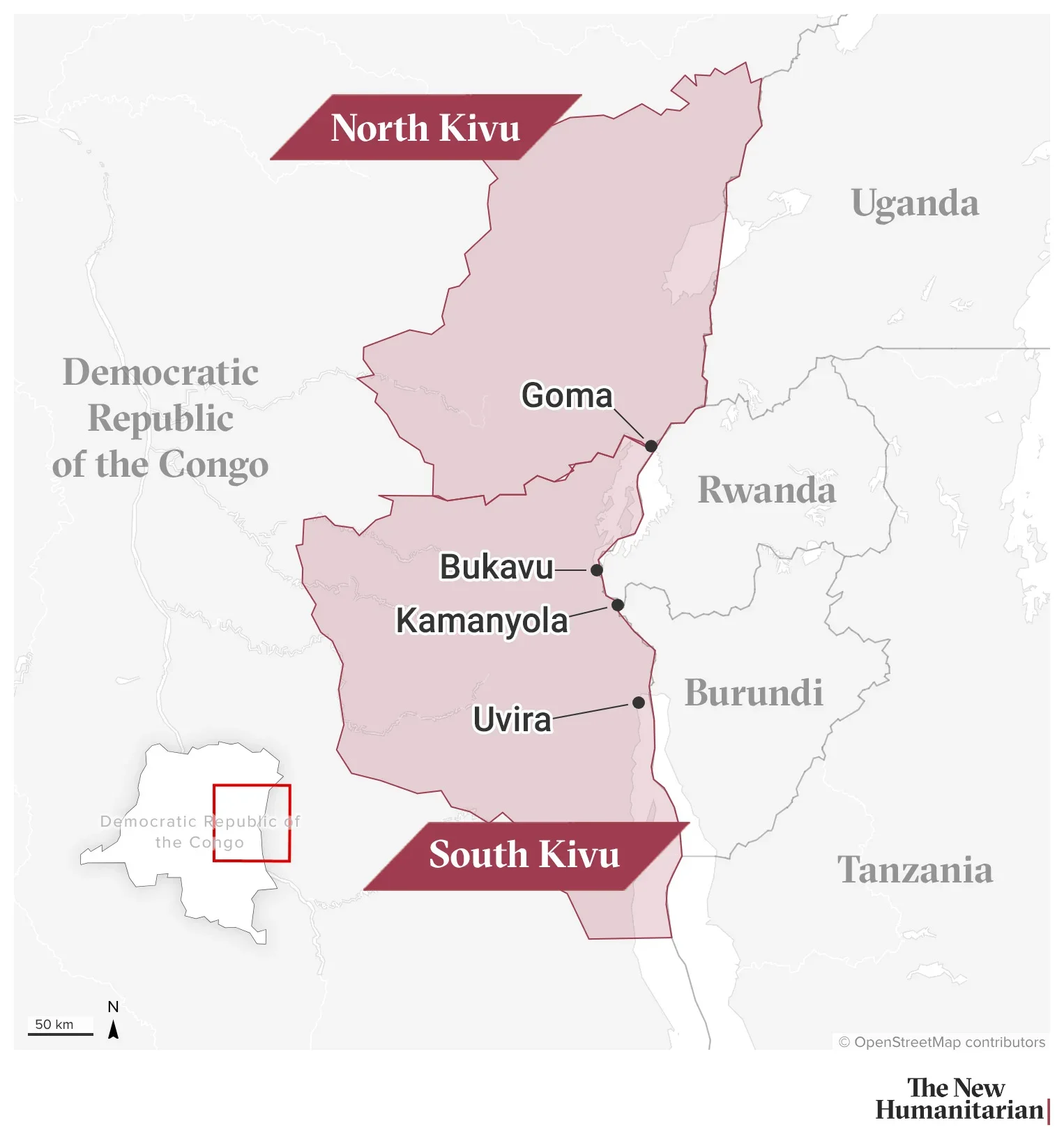
“The problem at hand is the ongoing violence and systematic ethnic cleansing that targets the Congolese Banyamulenge community in the South Kivu region of the Democratic Republic of the Congo (DRC).”
Image credit: The New Humanitarian
This ongoing attacks are part of a coordinated plan implemented since April 2017 to cleanse the area of any Banyamulenge presence. Over the past eight years, two thousand Banyamulenge people have lost their lives; over 90% of villages and the core-infrastructure have been destroyed by being burned to the ground; more that 500,000 head of cattle has been looted; and tens of thousands of people have been dispersed in refugee camps in neighbouring countries. Reports of each of these atrocities were submitted to the current government, but to no effect. Indeed, the Banyamulenge massacres have occurred on the watch of Congolese government officials and the UN Peacekeeping Mission (MONUSCO).
This project is concerned with exploring the circumstances behind the formation of Twirwaneho, a spontaneously-born self-defence movement. Twirwaneho actions are a direct response to the inability of the Congolese state and its security agents to guarantee the protection of all its citizens. While the Banyamulenge population felt abandoned by their government, they did not consider the Congolese army as their enemy. In fact, they were petitioned to provide non-discriminatory protection. The analysis goes on to appriase the likelihood of a sustainable peace from a convergence of the Eastern African regional interests, the African Union, the Angola Peace Program, the Doha Peace agreement and United States-brokered agreements between countries concerned for the Congolese in general and the Banyamulenge minority ethnicity, in particular.